

On-Demand Manufacturing Solutions
+8615817600962      info@alpha-mold.com
Current position: Home>Resources>Blogs

Blog

We share insights, industry updates, and expertise in precision manufacturing.

Die Casting Molding: A Practical Guide for Manufacturers

Die casting molding is a widely used manufacturing process for producing high-volume, dimensionally stable metal components. By injecting molten metal into precision-machined steel molds (dies) under high pressure, manufacturers can achieve complex shapes with excellent repeatability. From automotive to electronics, die casting remains essential in modern product development.

In this article, we’ll explore how die casting molding works, its advantages, common applications, and what to consider when sourcing die casting mold suppliers—especially for custom aluminum and zinc parts.

What Is Die Casting Molding?

Die casting molding involves the injection of molten metal into a hardened steel mold cavity under high pressure. The mold consists of two halves: the stationary half (cover die) and the movable half (ejector die). After the metal solidifies, the mold opens, and the part is ejected.

This process is best suited for non-ferrous metals such as:

  • Aluminum

  • Zinc

  • Magnesium

There are two primary types:

  • Hot chamber die casting (ideal for zinc, magnesium)

  • Cold chamber die casting (suitable for aluminum, brass)

Benefits of Die Casting Molding

Die casting offers a compelling mix of speed, precision, and surface quality. Key advantages include:

1. High Production Efficiency

Once tooling is complete, the process is fast and consistent—ideal for high-volume production.

2. Dimensional Accuracy

Tight tolerances reduce the need for secondary machining.

3. Complex Geometry

Thin walls, fine details, and internal features can be molded directly.

4. Excellent Surface Finish

Parts often require little or no post-processing for appearance.

5. Material Utilization

Minimal waste thanks to precise cavity filling and reusable excess material.

Common Applications of Die Cast Parts

Die casting is used across industries to produce robust, lightweight components:

  • Automotive: Engine housings, transmission cases, brackets

  • Consumer electronics: Enclosures, connectors, heat sinks

  • Industrial equipment: Pneumatic tools, pump bodies, levers

  • Home appliances: Fan blades, mounting plates, handles

Each application benefits from the strength and repeatability of pressure-cast components.

Design Considerations for Die Casting Molds

Successful die casting requires thoughtful mold design. Critical factors include:

Draft Angles

To allow for smooth ejection, surfaces must be angled slightly.

Wall Thickness

Uniform wall thickness ensures even cooling and reduces defects like warping.

Parting Lines and Ejection

Design must account for how the mold opens and how the part will be removed.

Venting and Overflow

Proper air evacuation helps reduce porosity and incomplete filling.

An experienced mold maker will guide clients through the best practices to achieve reliable results.

Sourcing a Die Casting Mold Supplier

When choosing a supplier for die casting mold design and production, consider the following:

  • Material knowledge: Experience with specific metals (e.g., aluminum, zinc)

  • Tooling quality: In-house CNC machining and mold testing capability

  • Tolerance control: Ability to meet tight dimensional and cosmetic requirements

  • Cycle life expectations: Steel grade and treatment suited for your production volume

  • Communication and support: Design-for-manufacturing advice and sampling process

Global buyers often turn to China for cost-effective, high-quality tooling, but careful vetting is essential.

How Alpha-Mold Supports Die Casting Molding Projects

At Alpha-Mold, we support clients in developing custom die casting molds tailored to their part requirements and production goals. Whether you're manufacturing complex aluminum housings or high-detail zinc components, our services include:

  • Collaborative mold design reviews

  • DFM analysis and flow simulations

  • Precision mold manufacturing using high-grade steels

  • Trial sampling and first article inspection (FAI)

  • Mold maintenance and after-sales support

We also provide low-volume pilot production to help clients validate parts before moving to full-scale production.

Die casting molding remains a versatile and efficient solution for producing strong, high-precision metal parts at scale. When designed and executed properly, it can significantly reduce cost per unit while maintaining exceptional quality standards.

If you're looking to develop a new product or improve your current metal components, Alpha-Mold is ready to assist with die casting mold design, fabrication, and testing—backed by years of experience and a global supply chain.


How to Choose the Right Metal Part Fabrication Suppliers for Your Project

Finding a reliable metal part fabrication supplier is essential for manufacturers who need high-quality, custom metal components. From small precision brackets to complex structural frames, these suppliers play a key role in turning design concepts into functional parts. With a growing global supply base—especially in regions like China, Southeast Asia, and Eastern Europe—companies have more options than ever, but also more complexity when evaluating vendors.


What Do Metal Part Fabrication Suppliers Do?

Metal part fabrication suppliers specialize in converting raw metal materials into custom components through various manufacturing techniques. These processes typically include:

  • Laser cutting, waterjet cutting, or plasma cutting

  • CNC machining (milling, turning, drilling)

  • Bending and forming using press brakes or rollers

  • Welding and assembly

  • Surface treatments like powder coating, anodizing, or electroplating

These suppliers may serve a wide range of industries—from automotive and aerospace to electronics, medical equipment, and industrial machinery.

Long-Tail Keyword Focus:

  • custom metal part fabrication suppliers for industrial equipment

  • precision sheet metal fabrication vendors for electronics

  • CNC metal part manufacturers with welding and coating services

  • trusted steel and aluminum part suppliers for OEM projects

Types of Metal Parts Commonly Fabricated

Fabrication suppliers work with a variety of metals, depending on the application:

1. Steel Parts

Mild steel, stainless steel, and high-strength steel are common for load-bearing components, structural frames, and enclosures.

2. Aluminum Components

Used for lightweight applications such as heat sinks, brackets, and housings in electronics and automotive parts.

3. Copper and Brass

Often fabricated into components for electrical conductivity or corrosion resistance.

4. Titanium and Specialty Alloys

Used in aerospace, medical, and defense applications for their strength-to-weight ratio and corrosion resistance.

Each metal requires different handling techniques, so choosing a supplier with experience in the specific material is key.

How to Evaluate a Metal Fabrication Supplier

When assessing metal part fabrication vendors, it's important to go beyond the surface to evaluate long-term fit. Consider these key factors:

Manufacturing Capabilities

Does the supplier offer all the processes required for your part—cutting, forming, welding, machining, finishing?

Tolerance and Quality Standards

What tolerances can they hold consistently? Do they follow ISO 9001 or industry-specific standards?

Material Sourcing

Can they trace and verify materials used, especially for regulated industries like aerospace or medical?

Prototyping and Production Scalability

Are they flexible enough to handle both short-run prototypes and full-scale production?

Quality Control and Inspection

Do they perform in-process inspections, final dimensional checks, and offer reports such as PPAP or FAI?

Communication and Project Support

A supplier’s technical communication is just as important as their fabrication ability. Consider:

  • Responsiveness during RFQ and production

  • Fluent communication in English (or your native language)

  • CAD file compatibility and drawing interpretation

  • Support for design-for-manufacturability (DFM) recommendations

Smooth collaboration ensures fewer delays, reduced errors, and better overall results.

Why Many Companies Source from Asia-Based Fabrication Suppliers

For global OEMs and startups alike, Asia-based metal fabrication suppliers—particularly in China—offer a mix of cost efficiency, rapid lead times, and strong production capabilities.

Benefits include:

  • Lower unit costs for medium to high volumes

  • Availability of a wide range of metals and finishes

  • In-house capabilities to reduce subcontracting delays

  • Access to skilled labor and modern machinery

However, successful sourcing from abroad often depends on having trusted partners who manage communication, logistics, and quality assurance.

How Alpha-Mold Supports Metal Part Fabrication Projects

At Alpha-Mold, we work closely with a vetted network of metal part fabrication suppliers in Asia and beyond. Our team helps clients navigate vendor selection, technical reviews, and production oversight, ensuring the fabricated parts meet the design, tolerance, and material requirements for their end use.

Our support includes:

  • Supplier qualification and performance tracking

  • Manufacturing feasibility review for each design

  • Sample inspection, measurement reports, and batch testing

  • On-time logistics coordination and global shipping

Whether you need a one-off prototype or a large-scale production run, Alpha-Mold provides full-cycle project management to keep your supply chain running efficiently.


Choosing the right metal part fabrication supplier is about more than price—it's about finding a partner who can consistently deliver high-quality parts that meet technical standards and production timelines. With the right guidance, companies can benefit from global sourcing while maintaining the quality and reliability their products demand.

If you're searching for custom metal fabrication suppliers with proven experience and technical depth, Alpha-Mold is ready to support your project from concept to completion.


Tungsten Carbide Mold Parts: Durable Solutions for High-Wear Applications

In high-volume and high-precision manufacturing, tool wear is a constant challenge. For industries that mold abrasive materials or demand extreme durability, tungsten carbide mold parts offer a reliable and long-lasting solution. Known for their exceptional hardness and resistance to wear, these parts are widely used in molds for automotive, electronics, and industrial components.


What Are Tungsten Carbide Mold Parts?

Tungsten carbide mold parts are components made from a composite material composed of tungsten and carbon, often bound with cobalt. They are fabricated for high-wear sections of a mold, such as:

  • Core pins and inserts

  • Cavities exposed to abrasive resins

  • Guide bushings and sleeves

  • Punches, ejector pins, and cutting edges

These parts are especially beneficial in tooling scenarios where conventional tool steels would wear out quickly or require frequent maintenance.

Why Use Tungsten Carbide in Mold Making?

Tungsten carbide offers several advantages compared to standard tool steels or hardened inserts. Its unique properties include:

  • High hardness: Second only to diamond, tungsten carbide resists deformation under pressure.

  • Superior wear resistance: Ideal for long production runs with abrasive fillers or glass-reinforced plastics.

  • Thermal stability: Withstands high molding temperatures without losing strength or dimensional accuracy.

  • Extended mold life: Reduces the frequency of part replacement and mold maintenance.

For these reasons, tungsten carbide mold components for high-abrasion injection molding are often the material of choice in demanding applications.

Long-Tail Keyword Focus:

  • tungsten carbide mold inserts for plastic injection molds

  • high-wear mold parts made from tungsten carbide

  • custom tungsten carbide tooling components for injection molding

  • durable carbide core pins and sleeves for high-volume production

Common Applications of Tungsten Carbide Mold Components

Tungsten carbide mold parts are not universal, but they shine in specific applications:

1. Automotive Connectors and High-Temperature Housings

Glass-filled nylon and PEEK materials used in automotive parts can quickly erode standard steel tools. Carbide parts provide longer service life.

2. Electronic Device Casings and Precision Connectors

Small components with sharp corners or fine details benefit from carbide inserts, which maintain shape even after hundreds of thousands of cycles.

3. Industrial and Mechanical Equipment

Tungsten carbide punches and sleeves are used in compression molds and progressive dies for robust metal or plastic parts.

4. Aerospace and Defense

Precision, strength, and resistance to thermal stress make carbide mold components ideal for specialized aerospace-grade polymers.

Manufacturing and Tolerances of Carbide Mold Parts

Producing custom tungsten carbide mold parts requires specialized processes and equipment. These may include:

  • Wire EDM for detailed contours and tight-tolerance features

  • Surface grinding and lapping for ultra-smooth finishes

  • Brazing or mechanical fastening of carbide inserts to steel housings

  • CNC profile machining for complex geometries

Tolerances for carbide mold parts can reach ±0.002mm in critical areas, depending on part size and application.

Selecting a Supplier for Tungsten Carbide Mold Parts

Working with carbide requires both material expertise and process control. When evaluating a supplier, consider the following:

  • Experience with wear-resistant tooling solutions

  • In-house carbide machining or strong partnerships with carbide specialists

  • Availability of inspection reports and material certifications

  • Design support for integrating carbide components into steel molds

  • Understanding of thermal expansion differences between carbide and steel

A qualified supplier can advise on where carbide is most beneficial in the mold design, balancing cost and performance.

How Alpha-Mold Supports Carbide Mold Part Projects

At Alpha-Mold, we help clients identify where tungsten carbide tooling parts make the most impact—whether in improving tool longevity or maintaining precision under high cycle volumes. We work closely with carbide machining partners and manage the full lifecycle of the part, from design review to quality inspection and delivery.

Our services include:

  • Engineering consultation for hybrid steel-carbide mold designs

  • Sourcing of high-density carbide materials with verified origins

  • CNC, EDM, and grinding processes tailored for carbide handling

  • Full dimensional reports and hardness testing upon request


Tungsten carbide mold parts are an effective solution for extending mold life and enhancing performance in high-demand manufacturing environments. When integrated correctly, these components help reduce tool maintenance, improve part consistency, and support efficient, long-term production.

If you're exploring custom tungsten carbide mold inserts or high-wear components, Alpha-Mold is ready to support your project with the experience and technical depth needed to ensure success.


Choosing China Precise Part Mold Suppliers: Key Considerations for Quality and Reliability

As global manufacturing continues to evolve, many companies are turning to China-based precise part mold suppliers to meet their tooling needs. These suppliers offer a wide range of capabilities, from machining micro-tolerance mold components to producing fully assembled mold tools. With competitive pricing and a growing focus on quality, Chinese suppliers have become valuable partners for industries such as automotive, electronics, packaging, and medical devices.

What Are Precise Part Mold Suppliers?

Precise part mold suppliers specialize in the production of mold components and tooling systems that demand tight dimensional accuracy and high repeatability. These suppliers often provide:

  • Mold bases and inserts

  • Custom cores and cavities

  • Ejector and lifter systems

  • Cooling channels and guide elements

  • Tolerances typically within ±0.005mm or better

The term "precise part" reflects not just tight tolerances, but also the consistency across production batches, essential for high-volume and critical applications.

Why Consider Mold Suppliers in China?

Over the past decade, China has emerged as a global leader in precision mold manufacturing. Several factors contribute to this position:

  • Advanced Equipment: Many suppliers use high-speed CNC machining centers, EDM, wire cutting, and precision grinders.

  • Skilled Labor: China's workforce is experienced in both standard and custom mold fabrication techniques.

  • Integrated Supply Chains: From raw material sourcing to heat treatment and finishing, most processes are localized.

  • Cost Advantage: While maintaining high precision, Chinese suppliers often offer cost-effective solutions compared to Western counterparts.

These strengths allow Chinese mold suppliers to serve both domestic and international markets efficiently.

Long-Tail Keyword Focus:

  • China precise part mold suppliers for injection molding

  • custom precision tooling manufacturers in China

  • micro-tolerance mold part suppliers from China

Common Industries Served by Precise Mold Suppliers in China

Chinese mold makers supply precise tooling and components to a wide range of industries, including:

1. Automotive Components

Suppliers often produce molds for parts such as connectors, dashboard components, lighting elements, and under-the-hood housings.

2. Medical and Laboratory Products

High-precision tools are used to mold items like syringes, test tubes, diagnostic components, and microfluidic devices.

3. Consumer Electronics

Precision is key when molding parts for phone cases, connectors, battery holders, and display housings.

4. Industrial Equipment

From pump housings to custom seals, many industrial products rely on tight-fitting, durable molded parts.

Evaluating a Precise Part Mold Supplier in China

When choosing a supplier, it's important to look beyond basic capabilities. Consider the following:

Technical Expertise

Does the supplier understand complex geometries, parting line considerations, or insert molding challenges?

Engineering Support

Can they offer feedback during the design phase, suggest changes for manufacturability, or perform mold flow analysis?

Tooling Quality

What materials are used? Are parts hardened, ground, and finished to international standards?

Inspection and Documentation

Do they offer CMM reports, SPC data, and material certifications to validate quality?

Communication and Project Management

Can the team communicate clearly in English? Are timelines realistic and progress updates regular?

Benefits of Working with Trusted Chinese Suppliers

Collaborating with a proven Chinese supplier for precise mold parts offers the following advantages:

  • Customization: Tools and parts built specifically to your product requirements

  • Shorter Lead Times: With in-house processes and experienced teams

  • Scalability: Ability to support both low-volume and large-scale production

  • Global Experience: Familiarity with export documentation and international mold standards (HASCO, DME, etc.)

How Alpha-Mold Connects You with Qualified Suppliers

At Alpha-Mold, we maintain long-term partnerships with vetted China-based precise mold suppliers. Whether you need custom inserts, high-volume production molds, or specialty tooling, we oversee the project from design consultation through final inspection and delivery.

Our support includes:

  • Supplier qualification and management

  • Engineering review and DFM (Design for Manufacturability)

  • Progress tracking and quality control

  • On-time logistics coordination

By bridging language, quality, and technical gaps, Alpha-Mold ensures smooth, transparent collaborations with trusted Chinese partners.


Finding a reliable China precise part mold supplier can be a strategic move for businesses seeking high-quality, custom tooling at competitive prices. With careful evaluation and the right partner, you can secure mold components that meet your project’s precision, timeline, and budget requirements.

For companies seeking tailored support and quality assurance, Alpha-Mold is ready to help you navigate and manage your supply chain in China, ensuring every mold part meets your exact standards.


Precision Mold Parts for High-Performance Tooling: What Manufacturers Should Know

In the world of advanced manufacturing, precision mold parts for injection molding tools play a critical role in ensuring product quality, repeatability, and production efficiency. These components, which include ejector pins, guide pillars, cores, cavities, and other mold inserts, must meet exacting tolerances to function reliably under high-volume and high-pressure conditions.


What Are Precision Mold Parts?

Precision mold parts are components designed to fit into custom molds used for producing plastic or metal parts. These parts are manufactured to tight tolerances, often within microns, to ensure that every molded product meets quality and dimensional standards.

Examples include:

  • Core inserts and cavities

  • Sprue bushings and nozzles

  • Ejector pins and sleeves

  • Interlocks, lifters, and slides

  • Cooling elements and alignment components

Unlike standard components, precision mold parts are often customized for specific tooling systems and product geometries.

Why Precision Matters in Mold Components

Precision is not just a desirable quality—it is often essential. Here’s why:

  • Consistency: Even small deviations in mold components can lead to flash, short shots, or dimensional inaccuracies.

  • Tool Longevity: Properly fitted components reduce wear on the mold, extending its usable life.

  • Cycle Time Optimization: Tight tolerances contribute to smooth operation and fast cycle times, which are crucial for high-volume manufacturing.

  • Reduced Downtime: Well-made precision components minimize the risk of unexpected breakdowns or the need for rework.

Applications of Custom Precision Mold Parts

Precision mold parts are used in a wide range of industries, including:

  • Automotive: Complex molds for interior and exterior parts demand high wear resistance and exact alignment.

  • Medical Devices: Micro-molded components require miniature precision parts with clean finishes and tight fits.

  • Consumer Electronics: High-volume runs of intricate components benefit from interchangeable and wear-resistant inserts.

  • Packaging: Multi-cavity molds need consistent core and cavity sets to ensure uniform wall thickness and structural strength.

In these sectors, even minor deviations can impact product function or lead to costly defects.

Materials Commonly Used in Precision Mold Parts

The choice of material depends on factors such as cycle speed, pressure, wear, and the type of resin used. Common materials include:

  • Tool Steels (e.g., H13, S7, P20) – High strength and heat resistance for long-life components.

  • Carbide – Ideal for wear parts exposed to abrasive resins or high-cycle applications.

  • Stainless Steel – Often used in medical and food-grade molding for its corrosion resistance.

  • Copper Alloys – Excellent for heat transfer elements in cooling systems.

Heat treatment and surface coatings such as nitriding or PVD may also be applied to enhance hardness and reduce wear.

Quality Control and Tolerance Management

High-precision components require stringent quality control practices. These include:

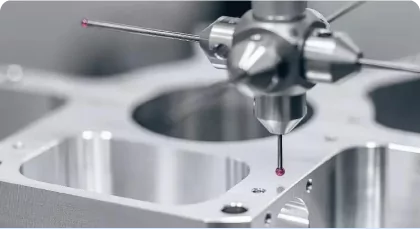
  • Coordinate Measuring Machines (CMM): To verify critical dimensions.

  • Hardness and Surface Roughness Testing: To assess durability and part finish.

  • Fit and Function Checks: Ensuring proper assembly within the mold framework.

Reliable manufacturers will provide full inspection reports and traceability for critical parts.

Choosing a Supplier for Precision Mold Parts

When selecting a supplier or manufacturer for custom precision mold components, consider the following:

  • Experience with complex geometries

  • Capability to meet international standards (e.g., DIN, JIS, MISUMI)

  • Use of advanced machining technology, such as high-speed CNC, wire EDM, and grinding

  • Responsive engineering support for design optimization

  • Reliable lead times and after-sales service

Working with a supplier who understands both the engineering and production requirements of molding operations can significantly streamline your tooling lifecycle.

How Alpha-Mold Supports Precision Mold Manufacturing

At Alpha-Mold, we specialize in the production and sourcing of high-precision mold parts for custom injection molds, with support for both prototype and full-scale production tools. Our in-house engineering team works closely with clients to ensure every part meets application-specific standards, whether for small inserts or complete mold base assemblies.

We also offer:

  • Rapid turnaround on custom mold parts

  • Precision grinding and finishing services

  • Material selection consultation based on tool usage

  • QC reports with every shipment


Precision mold parts are not simply interchangeable components—they are foundational to the performance and reliability of modern tooling systems. Whether you're building a new mold or maintaining an existing one, investing in high-quality precision components ensures better part consistency, reduced downtime, and overall manufacturing efficiency.

If you're looking for a dependable source of custom precision mold parts for injection tools, Alpha-Mold offers a full range of services tailored to your project’s needs. Contact us today to discuss your specifications or request a quote.


Custom Mold Making for Plastic Parts

Custom mold making is a foundational step in the production of plastic parts used across industries ranging from electronics and automotive to medical devices and household goods. As product designs become more specialized and performance requirements increase, the need for precision-engineered, custom molds becomes even more critical. 

What Is Custom Mold Making?

Custom mold making refers to the design and fabrication of a mold specifically tailored to a unique plastic part. Unlike standard molds, custom molds are built around the exact dimensions, tolerances, and material requirements of a client’s product. These molds are most often used in injection molding, a manufacturing process where molten plastic is injected into a cavity to form parts with high accuracy and repeatability.

When Custom Molds Are the Right Choice

While off-the-shelf molds may be suitable for generic parts, custom molds are preferred in situations where:

  • Tight tolerances or detailed features are required.

  • High production volumes demand consistent part quality.

  • Unique shapes or materials are part of the design.

  • Brand-specific elements, such as logos or surface textures, need to be incorporated.

Custom molds help manufacturers ensure that the finished parts match the design intent, both visually and functionally.

Key Stages in Custom Mold Making

Unlike standard mold production, custom mold making involves close collaboration between engineers, designers, and toolmakers. The process typically includes the following steps:

1. Part Design Review

Before mold design begins, the part’s geometry is analyzed to ensure manufacturability. Features such as wall thickness, draft angles, and undercuts are assessed to avoid common molding issues like warping or incomplete filling.

2. Mold Design and Simulation

CAD software is used to design the mold. In some cases, mold flow simulation tools help predict how the plastic will fill the mold, identifying potential trouble spots like air traps or weld lines.

3. Tool Fabrication

Once the design is approved, toolmakers machine the mold components using CNC milling, EDM, and grinding equipment. Steel or aluminum is chosen based on the production volume and required durability.

4. Mold Trial and Tuning

Initial test runs are conducted using the mold in an injection molding machine. Any deviations from the intended part dimensions are corrected through mold adjustments before final approval.

5. Production Readiness

After validation, the mold is ready for regular production cycles. Preventive maintenance plans are also put in place to preserve the mold’s performance over time.

Material Considerations in Plastic Mold Making

Choosing the right plastic resin is an important part of the mold making process. The material affects not only the final product’s strength and durability but also the mold design itself. For example:

  • Glass-filled plastics may require molds with extra wear resistance.

  • Flexible resins like TPE may need special ejection features.

  • Transparent plastics such as polycarbonate often call for polished mold surfaces.

Experienced mold makers take these factors into account during the design phase to ensure optimal molding outcomes.

What to Look for in a Custom Mold Manufacturer

Selecting a partner for custom mold making is more than just comparing quotes. Key factors include:

  • Experience with similar parts or industries

  • In-house design and tooling capabilities

  • Ability to provide feedback during design refinement

  • Clear communication throughout the project

  • Support for both prototyping and full-scale production

A reliable mold maker will work collaboratively, guiding you from concept to production with attention to detail and quality control.

Benefits of Custom Mold Making for Plastic Parts

Custom molds offer a number of strategic advantages:

  • Improved part consistency and reliability

  • Faster cycle times with optimized mold design

  • Reduced material waste through accurate cavity shaping

  • Lower long-term costs when producing large volumes

Investing in a well-designed custom mold often results in a more efficient production process and a higher-quality final product.


Custom mold making is a smart investment for manufacturers who prioritize precision, performance, and long-term production efficiency. By tailoring the mold to the part’s specific design, businesses can achieve greater control over product quality and production output.

At Alpha-Mold, we specialize in designing and building custom molds for plastic parts used across a wide range of applications. Our team combines engineering expertise with modern manufacturing tools to deliver molds that meet your exact specifications. If you’re planning a new plastic part and need reliable custom tooling, we’re here to help you move from concept to production with confidence.